
October 30, 2026
How to Design a High-Impact Brand Activation Photo Booth That Captures Leads

Picture an attendee stopping at your event booth to create an AI portrait, then sharing a branded image before heading to the next exhibit. Seconds later, your marketing team has a new contact to follow up on. A brand activation photo booth turns that passing glance into an active brand experience when the setup, content, lead capture, and follow-up work as one campaign.
Whether you’re planning a product launch, trade show, or sponsor activation, this guide walks through goals, branding, booth formats, lead capture, ROI, cost factors, and Austin logistics. Each section explains what to decide and why. Use it to plan an experience your audience enjoys and your team can measure.
1. Define Your Brand Activation Photo Booth Goals
Your brand activation photo booth should have one primary objective before you choose equipment or design the backdrop. A clear goal helps you decide what guests should do, what information you should collect, and how you’ll measure success.
For example, a software company exhibiting at a trade show might prioritize qualified business leads, while a consumer brand launching a new product might focus on social sharing and brand recall. A sponsored conference experience could measure participation alongside visibility for the sponsor.
Choose one main goal and one or two supporting metrics. If you want leads, track completed contact forms and qualified contacts. If you want broader exposure, measure shares, campaign hashtag use, and estimated reach. This gives you a practical way to evaluate the activation against its original purpose.
2. Connect Physical Branding With Digital Content
The booth should look like part of your campaign before guests interact with it, and the digital experience should reinforce that impression afterward. Consistent branding across the physical setup and digital delivery makes each interaction more recognizable.
Custom vinyl wraps can transform the booth exterior into a branded feature rather than leaving generic equipment visible. Pair the wrap with a custom backdrop, campaign colors, product imagery, and concise signage explaining what guests receive.
Your digital assets should carry the same visual identity. Branded email templates, SMS messages, custom URLs, and image overlays keep the campaign consistent from the first interaction to the final delivery.
For example, a product launch could use a branded photo frame, a campaign-specific gallery URL, and an email that delivers the image alongside a link to the product page. Each element gives guests a recognizable experience while creating a clear route to the next marketing touchpoint.
3. Choose a Booth Format That Fits Your Audience
The best booth format depends on the experience you want to create, the space available, and how quickly guests need to move through it. An elaborate activation can attract attention, but it must also support your lead capture process.
A classic print booth suits conferences, sponsor lounges, and events where guests appreciate a physical keepsake. GIF and video booths encourage shareable content, while 360-degree booths create movement and spectacle for launches and high-energy events. A bullet-time array booth freezes a moment as the camera view sweeps around the guest, and a roaming booth captures guests across a festival site or sponsor lounge without a fixed queue.
An AI photo booth for events can generate personalized portraits or themed transformations that give guests a distinctive reason to participate. This format may suit technology, fashion, beauty, and B2B campaigns, provided the processing time, output quality, and data-handling arrangements fit your requirements.
If your main objective is collecting qualified leads, consider whether a shorter photo experience with a clear contact form would perform better than a slower, more elaborate setup. You don’t need the most complicated technology to run an effective activation.
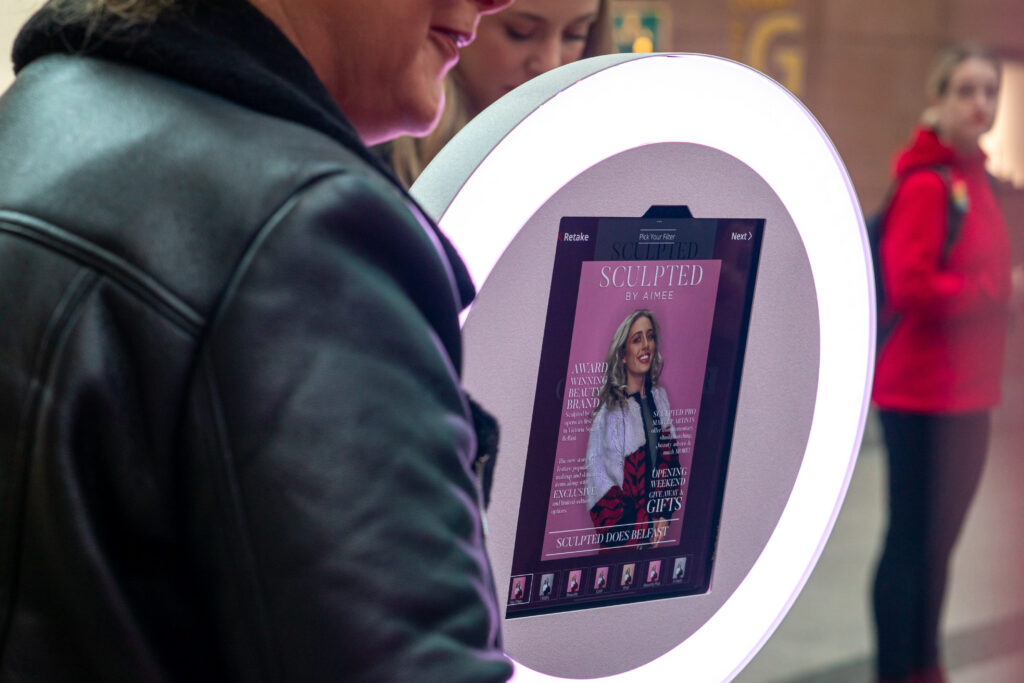
4. Design a Fast, Rewarding Lead Capture Journey
A strong lead capture experience makes participation easy and explains why a guest is being asked for contact details. Aim for a short, intuitive process that delivers the promised photo or video promptly.
A practical journey follows six stages:
- Attract: Use visible branding, lighting, signage, and an engaging concept to draw attention
- Engage: Let guests take a photo, GIF, video, or AI-generated portrait
- Reward: Show the finished result so guests understand the value
- Capture: Request the minimum contact information needed for the campaign
- Deliver: Send the content through email, SMS, or another agreed channel
- Follow up: Route eligible contacts to the appropriate marketing or sales workflow
For most activations, a name and email address may be enough to deliver an image and identify a contact. Company name or job title can help with B2B qualification, but making these fields optional can reduce unnecessary friction.
Automated CRM data capture can move submitted details into your customer relationship management system without relying on manual exports after the event. Before booking, confirm whether the booth platform supports your CRM, what information it transfers, and whether duplicate records can be identified.
Keep photo delivery separate from marketing permission. If you plan to send promotional emails or texts, use an appropriate opt-in process and explain how contact details will be used.
5. Make Every Digital Touchpoint Work Toward ROI
Start by mapping each digital touchpoint to a specific purpose. A useful evaluation connects booth activity to business outcomes rather than relying on photo counts alone.
A custom URL can lead to a product page, campaign landing page, or demo booking form. A branded email can deliver the guest’s content and direct them toward the next relevant action, while an SMS message can provide quick access to the image or gallery.
Your reporting should distinguish between engagement and conversion. Photos created, unique participants, completed forms, and gallery visits indicate activity. Qualified leads, demo bookings, purchases, and attributable revenue help you understand commercial impact.
Useful metrics include:
- Participation volume and unique guests
- Lead capture and form completion rates
- Marketing opt-in rates
- Photo deliveries, gallery visits, and social shares
- Qualified contacts and follow-up engagement
- Cost per lead and, where measurable, revenue attributable to the campaign
Set a baseline before the event and agree on reporting responsibilities with your provider. If the activation captures many contacts but produces few qualified leads, you may need to change the offer, audience targeting, form fields, or follow-up sequence.
6. What Affects the Cost of a Brand Activation Photo Booth?
The cost of a brand activation photo booth depends on the format, production requirements, staffing, and technology involved. A basic branded photo experience may require less investment than a fully wrapped installation with AI processing, CRM integration, and campaign-specific reporting.
These are the factors that shape a quote most:
- Booth format: A self-service selfie station needs less equipment and space than a 360, bullet-time, or AI experience
- Event duration and dates: Longer operating hours, multi-day installations, and high-demand dates require more staff time
- Custom production: Custom vinyl wraps, bespoke backdrops, signage, and branded templates add design and production work
- Staffing: Attendants, extra stations, or a dedicated technician change the scope for busy activations
- Prints or digital delivery: On-site printing adds hardware and supplies, while digital-only delivery keeps the setup lighter
- Data and integrations: Custom URLs, consent screens, CRM connections, and post-event reporting can require extra setup
- Venue and logistics: Travel distance, access restrictions, and complex installation requirements may also influence production costs
Request an itemized quote that separates the core rental from custom production and optional services. Ask whether the price includes delivery, setup, teardown, an attendant, branded templates, printing, digital delivery, and post-event reporting.
If your campaign only needs awareness and shareable content, a branded digital overlay and backdrop may be sufficient. If lead qualification and measurable follow-up are essential, investing in the right data capture and reporting capabilities may be more useful than spending the entire budget on elaborate physical styling.
Because pricing depends on your event specifications, request a quote based on the venue, schedule, expected attendance, branding needs, and desired integrations rather than relying on a generic rental estimate.

7. Plan for Your Austin Event Logistics
An activation in Austin needs to account for the venue, event schedule, available space, and technical requirements before production begins. These details affect how the booth is installed, how guests move through it, and whether digital delivery works reliably.
Austin’s activation calendar includes SXSW, Formula 1 weekends at Circuit of the Americas, and Austin FC matchdays. Venue access, load-in slots, and vendor availability tighten around these dates, so start planning early if your activation falls on a major event weekend.
For a trade show at the Austin Convention Center or an event at a hotel or corporate venue, confirm the approved footprint, load-in and load-out windows, power access, internet arrangements, and any venue-specific installation rules directly with the venue. Do not assume that a standard booth footprint or connection will be available.
As a starting point, a compact AI or photo station typically needs at least 8 by 8 feet, while an open-air setup needs around 10 by 10 feet, plus space for the queue. Digital delivery relies on stable Wi-Fi or a cellular hotspot, and outdoor activations need shade and protection from Central Texas heat.
Estimate participation based on your event schedule and expected traffic. A popular activation can create a queue that blocks nearby displays or discourages guests from joining, so allow room for waiting participants without obstructing walkways.
Test the complete experience before doors open, including the camera, lighting, branding, form submission, CRM transfer, email or SMS delivery, and analytics. A successful test should follow the same process guests will use, not just confirm that the camera works.
Common Mistakes to Avoid
Small planning oversights can reduce participation, weaken lead quality, or make campaign performance difficult to measure. Address these risks before approving the final setup.
- Collecting too much information: Long forms discourage participation, so request only the details needed for delivery and qualification
- Using inconsistent branding: Mismatched booth graphics, emails, and image overlays weaken campaign recognition, so create one coordinated design system
- Ignoring CRM integration: Manual exports can delay follow-up and create errors, so test data transfer and field mapping before the event
- Measuring only photo volume: High participation does not automatically mean commercial success, so track qualified leads and relevant conversions
- Making marketing consent unclear: Combining image delivery with promotional permission can undermine trust, so explain each purpose separately
- Leaving follow-up until later: Delayed contact can waste the interest generated at the event, so prepare your messages and sales workflow in advance
Frequently Asked Questions
How Far in Advance Should You Book a Brand Activation Photo Booth in Austin?
For a large activation, aim to book two to three months ahead, especially in spring and fall, when Austin’s event calendar is busiest. Book earlier for SXSW or Formula 1 weekends. That window leaves time for custom wraps, template approvals, integration testing, and venue coordination before your event.
How Can You Keep a Brand Activation Photo Booth Running Smoothly?
Test the full guest journey before the event, from the first interaction and contact form to photo delivery and CRM transfer. Confirm who will troubleshoot technical issues, what backup equipment is available, and how the team will handle busy periods. A clear contingency plan helps prevent downtime from disrupting participation or lead capture.
How Quickly Do Guests Receive Their Photos?
With digital delivery, guests typically receive their photo, GIF, or AI portrait by text or email within about a minute of their session, so they can share it while still at the event. A full high-resolution gallery usually follows within a couple of days. Confirm the delivery timeline in your proposal.
Do You Need an Attendant for a Brand Activation Photo Booth?
For most activations, yes. An attendant draws guests in, explains the experience, keeps the queue moving, helps with contact forms, and fixes technical issues quickly. A self-service drop-off station can work for smaller internal events, but busy trade shows and sponsor activations benefit from someone guiding every session.
Who Owns the Photos From a Brand Activation?
Ownership and usage rights depend on your contract, so confirm them before booking. Ask whether you receive the full-resolution gallery, whether you can use images in paid ads and social campaigns, and whether guests are told how their photos will be used. Get these terms in writing rather than assuming they’re included.
Turn Your Brand Activation Into a Measurable Campaign
A well-planned brand activation photo booth connects physical branding, an engaging guest experience, automated lead capture, and post-event analytics so you can evaluate more than attendance alone. Your next step is to define your campaign goal, required integrations, and success metrics before requesting a quote.
Austin City Photo Booth helps you plan a photo booth experience around your event and marketing objectives. We can discuss the branding, booth format, digital experience, and technology requirements that fit your campaign, so you can assess the right setup for your budget and goals. We offer brand activations with a dedicated attendant, instant SMS or email delivery, and a post-event lead export alongside a full high-resolution gallery within 48 hours.
Maximize sponsor ROI and brand recall. Partner with us for your next brand activation in Central Texas.